Interested in history, this will fascinate you
History of Tassay and Chaunay
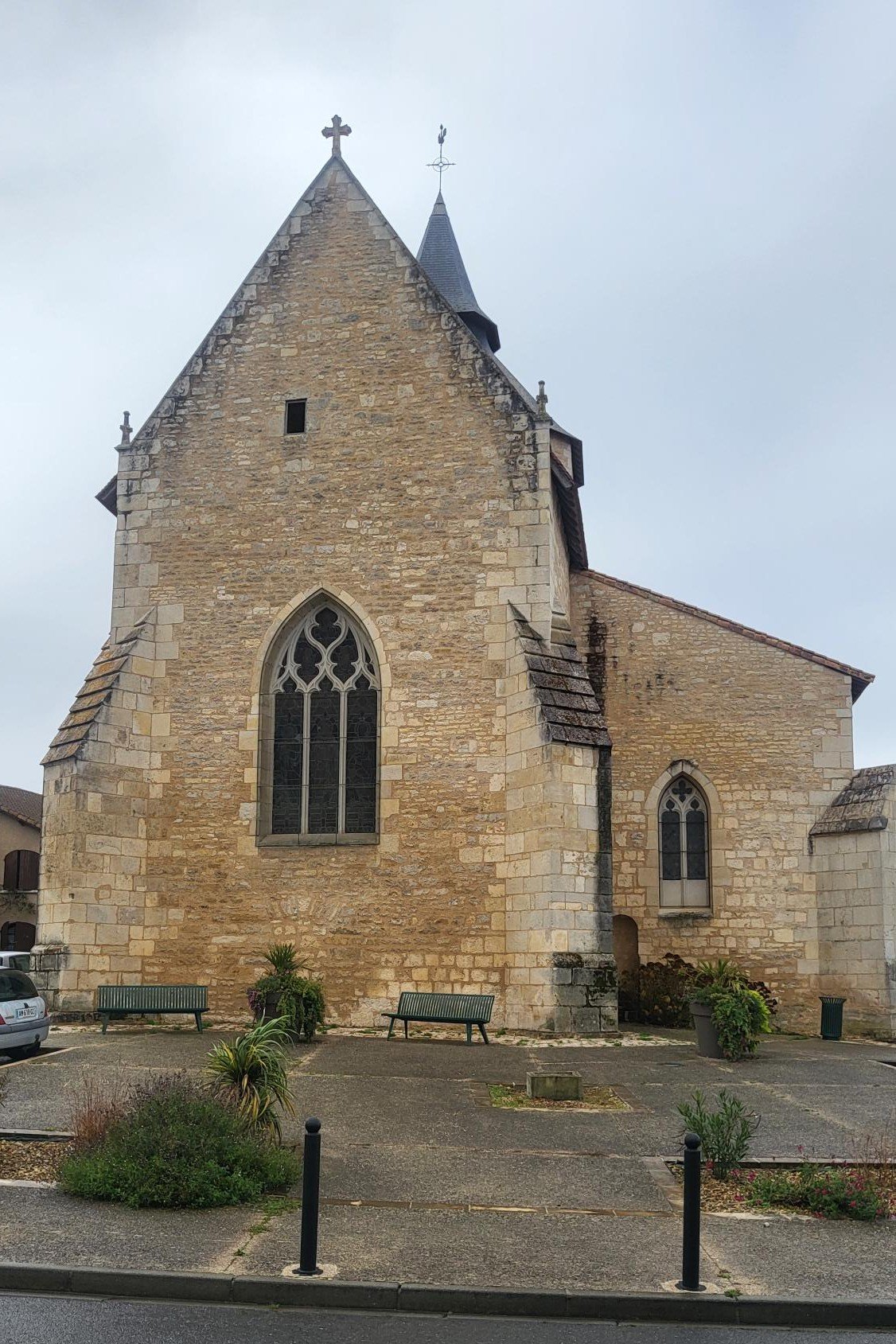
Once the site of a castle, at the beginning of 1357, the castle of Tassay was besieged by the English who bought the lord of the place, the lord of Montendre. Part of the population took refuge in the church of Chaunay, which was immediately besieged by armed men. The church is said to have been destroyed around 1357; The choir, the vaults and the bell tower were ruined. In the 1390s the choir was destroyed by the fighting, the bell tower collapsed under the assaults, causing the collapse of the vaults, and of which only the nave and the south arm of the transept remained. An underground passage, which opens to the south, just against the pillar of the bell tower, also served as a refuge for many inhabitants.
In 1411, Jean JOUSSERAND, knight, lord of Lairé and Tassay, made his will at the castle of Tassay, on July 7, asking to be buried in the church of Chaunay, on the tomb of his parents. He bequeathed to Marguerite de La Rochefoucauld, his wife, his movable property and a third of his immovables, subject to his endowment, and appointed her his executor. Jean Jousserand, who had worked for the defeat of the English and obtained the favour of the Duke of Berry, died in 1463 in Chaunay
After the defeat and departure of the English, around the 1490s, life resumed in Chaunay. The church in ruins, it was in the Chapel of the Château de Tassay that religious services took place.
In 1792, part of the cottage was once used as a place of worship when, during the French Revolution, the town church was damaged by fire and the family donated part of the house to the commune as a place of worship. You can see the stained glass window of the church of the original masonry and engraved in stone, you can see the shield with an eagle, these are the arms of the Jousserand family, it would have been a blue shield with a golden eagle that can also be seen now in the church of Chaunay. To the left of the window, there is an angel carved in stone. Outside the gite, on the wall, there is a stone head of a gargoyle and the stone stones up to the front door of the gite which comes from the original church.